Sport
Can Patrick Vieira rescue Senegal from their post-AFCON final hellscape?
Senegal, surely, must be asking what on earth they have done to receive the misfortune and wretched experiences they've endured since January, when they won, and then lost, the AFCON final.
Ed Dove · 25 September 2026 16:05 · 7 min
Senegal, surely, must be asking what on earth they have done to receive the misfortune and wretched experiences they've endured since January, when the Teranga Lions emerged victorious in the strangest Africa Cup of Nations final ever played.
Since then, their FIFA World Cup disintegrated, a two-goal lead against Belgium vanished, Pape Thiaw has departed as coach, players have fallen out, the federation has been hit by lurid allegations, planes have failed to turn up on time, and a legendary goalkeeper has departed the scene after picking up a serious injury during the ill-fated trip to North America.
Even the AFCON title -- and that second star -- has become contested.
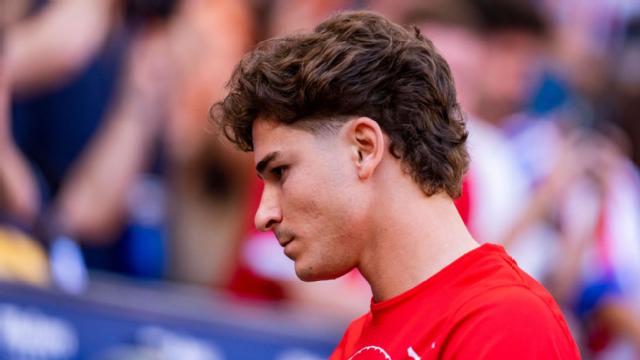
No one is suggesting anything supernatural happened in Rabat, but watch Brahim Díaz's baffling Panenka penalty again and... for a second or two... rationalism requires a certain effort.
When Diaz finally stepped up to take the stoppage-time spotkick in the AFCON final, he had had to wait for over 10 minutes, watching Senegal walk off the pitch -- with only Sadio Mané staying behind, persuading his teammates to return -- having had their own would-be winner ruled out moments before Morocco were awarded a penalty at the death.
VAR had intervened for the Atlas Lions -- as it had not done for Senegal -- and Diaz's frantic cajoling of the partisan home support to pressure the officials into checking the footage was rewarded with a generational opportunity to become a hero.
Score, and the wait was over.
Riot police were still forcing Senegal supporters back off the pitch in the far corner away from Diaz as he stepped up, Édouard Mendy had attempted to interfere with the penalty spot, and the match had ceased being (merely) a football contest.
By this point, Diaz had changed. Something had left him. The furious figure who had been haranguing officials demanding justice a quarter of an hour before now looked oddly alone, the energy drained from him.
He kissed the ball, placed it down, and with an entire country's longing for victory resting on his right foot, attempted perhaps the worst Panenka in the history of the sport.
For a moment, nobody seemed to fully comprehend what they had just witnessed. It was such an absurd decision, so bizarre that rumours of a collision will never be fully extinguished.
Play that situation 100 times, and how many times does Diaz attempt that penalty? Maybe once... and Senegal got that 'once'.
In extra time, Pape Gueye fired home the winner, and Senegal -- who had had to withdraw Krépin Diatta from the first team during the warm-up due to an unexplained illness, amidst allegations of Morocco stacking the deck against them -- lifted the title surely believing that they were invincible.
Almost nothing has gone right since
America offered Senegal the chance to consolidate their status as African champions with a deep run in the tournament, with the West Africans appearing confident that their quarterfinal run in 2002 could be matched.
Instead, they arrived with the unmistakable whiff of a team whose best days were behind them. Four of the spine were 34 or over -- including Mane, Mendy, Kalidou Koulibaly and Idrissa Gana Gueye -- while a further five were in their 30s.
These were players who deserved their moment, since their AFCON victory in 2019 and beyond, they'd helped to finally forge a team to rival the '02 generation in the national psyche.
Koulibaly's injury before the tournament was an early signal that things weren't going to go entirely to plan; the veteran hadn't played a competitive game for over two months before being thrust into the starting lineup against France, where he looked a shadow of his former self.
Overall, Senegal weren't bad against Les Bleus in New York, but that arguably made it worse, and there was a grim inevitability about France's 3-1 victory after Nicolas Jackson and Ismaïla Sarr had missed fine first-half chances.
Norway beat them 3-2, with Koulibaly enduring a disastrous outing, while a knee injury to Mendy took him out of the equation entirely.
Senegal had gone from being a strong, rugged defensive team searching for the most potent formula in attack to a unbalanced lineup with holes emerging everywhere.
They still managed to hammer Iraq 5-0 to stumble into the knockouts, where an unconvincing Belgium side lay in wait.
For 86 minutes, or thereabouts, the old Senegal, Africa's champions, appeared to have returned. They led 2-0, and had appeared comfortable, before Romelu Lukaku pulled one back and Youri Tielemans equalised with one minute left on the clock.
Senegal were bedraggled, and as Thiaw's touchline meddling appeared to play into their hands, the Europeans won a 125th-minute penalty when Lamine Camara was -- harshly -- adjudged to have fouled Tielemans in the box.
This time, there was to be no late Rabat reprieve, as the now Manchester United midfielder stepped up to beat Mory Diaw and dump the Teranga Lions out of the tournament.
The parallel was hard to miss; six months earlier, Senegal had been seconds from losing an AFCON final when a penalty taker inexplicably lost his nerve. Now, they were minutes from a World Cup knockout victory only for their secure position to disintegrate in front of them.
Pre-existing tensions between Thiaw and members of his squad -- including Pape Sarr -- led to the latter announcing his international retirement 'while the current technical team remain in place' in the immediate aftermath of the Belgium exit, while the FA were hit with allegations of officials' unbecoming behaviour during the tournament.
The federation denied the rumours, but their mere existence said something about the atmosphere around the team. It was never like this under Aliou Cisse, whose almost monastic presence at the head of the team set the tone for those around him.
Things got even worse when Senegal tried to go home from the USA.
A charter flight was supposed to collect the delegation after the World Cup. It didn't show up, with sources telling ESPN that changes at the sports ministry had led to a disconnect between the government and the federation, with no one ultimately taking responsibility for organising the flight.
Alternate arrangements were made for the players, although other members of the delegation remained stranded in Seattle. Five days after Senegal had been eliminated, some were still there, shunted into three-star accommodation due to a lack of other options.
One member of the delegation told ESPN they felt 'abandoned'. When everyone finally did arrive back in Dakar, the inquest began and fingers began to be pointed.
Federation president Abdoulaye Fall held a press conference to debrief the tournament, and turned his ire on the medical team - announcing at one point that the senior medic had been 'trained as a gynaecologist', which generated the headlines but ultimately didn't devalue the man's appropriate sports science qualifications.
Thiaw himself didn't last much longer; from African champion in January to sacked six months later, his was the kind of fall from grace that continental football very rarely experiences.
Again, however, the warning signs were there, with the head coach heading into the World Cup out of contract -- a topic he raised ahead of the Norway game -- with the federation not offering him new (acceptable) terms despite his unlikely AFCON success months earlier.
Given the success that that generation achieved together, they were perhaps allowed one tournament too many, while their success had concealed weaknesses in governance and organisation that became impossible to hide once results deteriorated.
Mane, Mendy, Koulibaly, Gueye and others had become part of the furniture, they 'were' Senegal, but they were allowed to grow old together, and the ending of this glorious chapter - whether it came pre, during, or post World Cup, was always going to be painful.
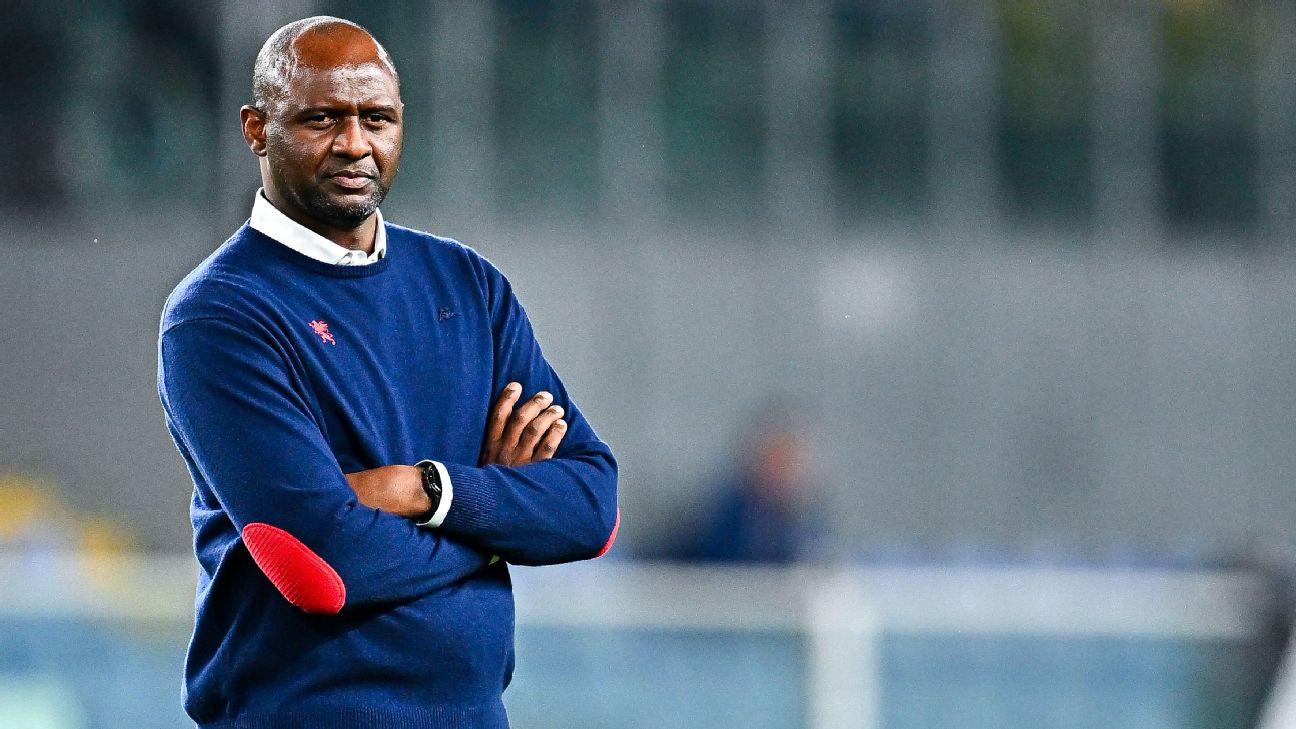
Patrick Vieira certainly has a lot to work with after inheriting the likes of Jackson, Sarr, Pape Matar Sarr, Lamine Camara, Ibrahim Mbaye and Iliman Ndiaye.
The new head coach's arrival, however, has not been smooth, with Senegal appearing to jump the gun in naming Vieira before all terms were agreed, and before Thiaw's exit had been finalised.
Eventually, he arrived in Dakar, and finally, after these 'cursed' months, we have something that feels like a beginning rather than the end.
Vieira was born in the capital, and if he can marry his connection with Senegal to the considerable experience he's gained during his illustrious playing career -- rather than his unconvincing managerial one -- he could be a success.
However, his first challenge, will be to get the Teranga Lions looking forwards rather than backwards, and help them move on from the consecutive calamities and controversies of recent months.
Vieira must now repair the dressing room, restore order, negotiate federation politics, and somehow transform a collection of talented footballers into a nation to be feared once again.